Iran's 'Super Revolutionaries' are trying to kill any deal with the US
Iran's radical hardliners are actively working to sabotage US negotiations, fueling Trump's claims of division within Tehran's leadership.
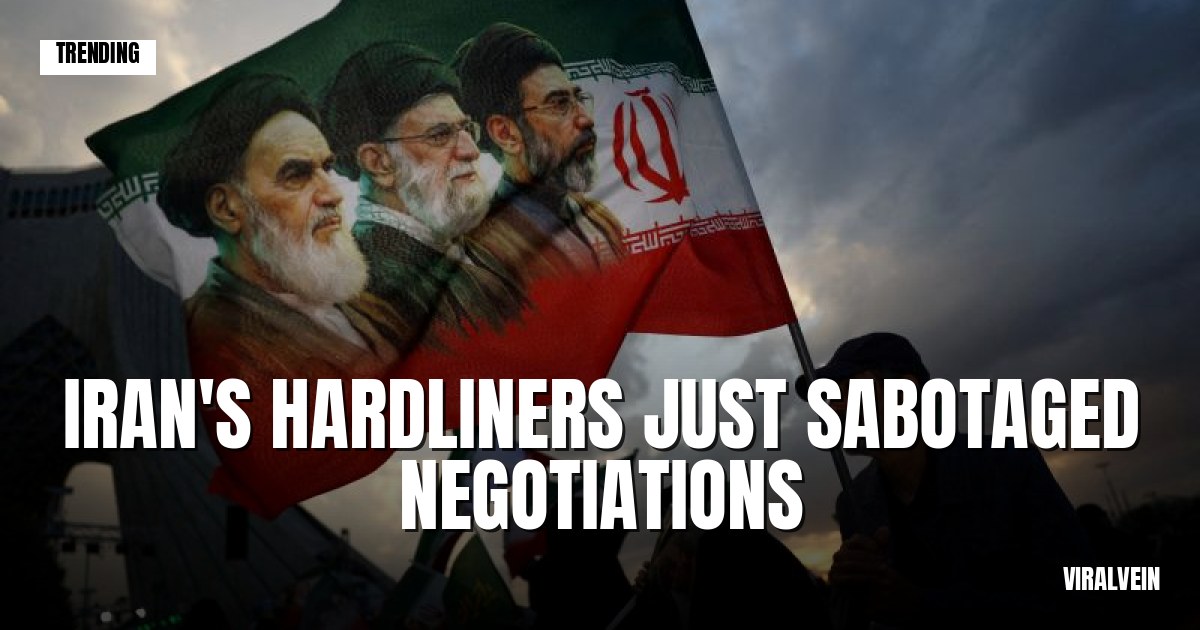
As the US and Iran inch closer to actual negotiations, a hardcore faction inside Iran is pulling every available string to blow the whole thing up. Call them the hardliners' hardliners. They're not having it. They've ramped up their campaign to tank any agreement with Washington, and they're doing it loudly enough that Trump's already citing them as proof that Iran's fractured from top to bottom.
This group represents the ideological guard of Iran's revolutionary system. They see compromise with America as existential betrayal. Not just bad policy. Betrayal. And they've got enough influence, enough media reach, and enough institutional backing to actually matter in how this plays out.
What makes this tricky for Tehran's negotiating team is that these hardliners aren't some fringe outfit shouting from the margins. They're embedded in security services, state media, and parliament. They've got platforms. When they start hammering the idea that any deal is capitulation, people listen.
The timing's brutal. Just as diplomatic channels were opening up and both sides seemed willing to at least talk seriously, this faction kicked into overdrive. They're using public statements, backroom pressure, whatever works, to convince Iran's leadership that walking away from the table is the only real option for someone who actually cares about the revolution.
Trump's already seized on this, using the factional infighting as ammunition to argue that Iran's leadership can't deliver on its promises anyway. Which creates a strange feedback loop: the more the hardliners sabotage talks, the more skeptical Washington becomes, which then gives the hardliners exactly what they want. Proof that the US can't be trusted.
The irony's pretty sharp. These guys claim to be protecting Iran's independence, but their efforts to block negotiations might actually push the country toward military confrontation or total isolation (neither of which looks good from where most Iranians are sitting). But the hardliners aren't exactly concerned with polling numbers.
Whether this faction actually succeeds in derailing talks depends partly on how much political capital Iran's moderates are willing to spend pushing back. Right now, they're fighting uphill against opponents who've got decades of revolutionary credibility and aren't shy about using it.