Labour's local election disaster puts Starmer in a tight spot
Labour Party loses over 1,000 council seats in England and control of Wales in devastating local elections, leaving PM Starmer facing pressure to stabilize his government.
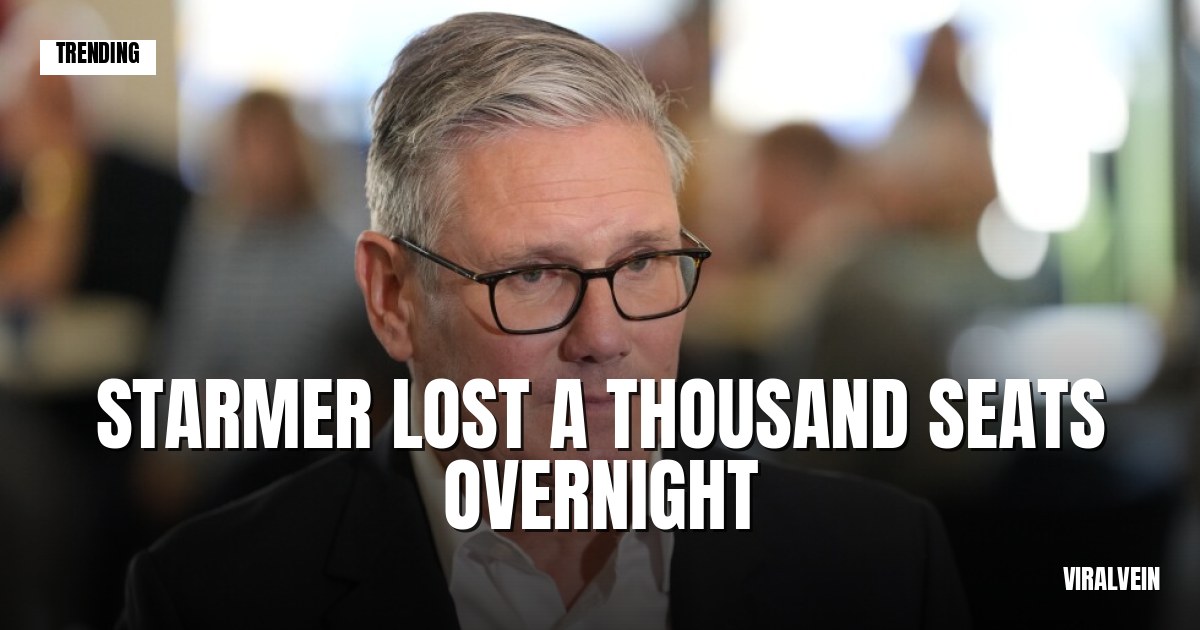
Keir Starmer's having a rough week. Britain's Prime Minister is scrambling to steady his government after Labour got absolutely battered in local elections across England, shedding over 1,000 council seats in a single night. And that's just England. Wales was worse. Labour lost control there too, ending nearly three decades in power in one of the UK's constituent nations.
The results landed like a brick. Labour won the general election just last year, so this kind of electoral whipping so soon after taking office isn't a great look. Starmer's been forced into damage-control mode, publicly pledging to fix things and get his government back on track. But you can't unsee numbers like these, and they're fueling louder calls from some corners asking whether he should just step aside.
Local elections matter because they're often a bellwether for bigger political shifts. Voters use them to send messages to Westminster without necessarily booting out the government entirely. What Labour's facing here is basically a warning light flashing red. The party's lost the kind of grassroots momentum that keeps a government healthy.
Starmer's team is trying to frame this as a mid-term slump, something that happens to most governments once the honeymoon period ends and people start feeling the actual effects of policy. But the scale of the losses suggests deeper problems. Whether it's cost-of-living frustrations, specific Labour policies that aren't landing, or just general voter restlessness (probably some mix of all three), something's shifted since that general election victory.
The pressure on Starmer himself is real now. His own MPs are watching these numbers closely. Some are already making noise about leadership, though ousting a PM who just won a general election would be politically messy. Still, if Labour keeps hemorrhaging support at local level, those whispers could get louder.
What happens next depends partly on whether Starmer can actually deliver on his promises to turn things around. He's got time. Governments usually do get second winds. But he needs to show it soon, because right now the momentum's going the wrong direction, and that's not something even a newly elected Prime Minister gets to ignore.